Commercial Fleet Services
Food Truck Wraps Built for Vehicles That Work for a Living
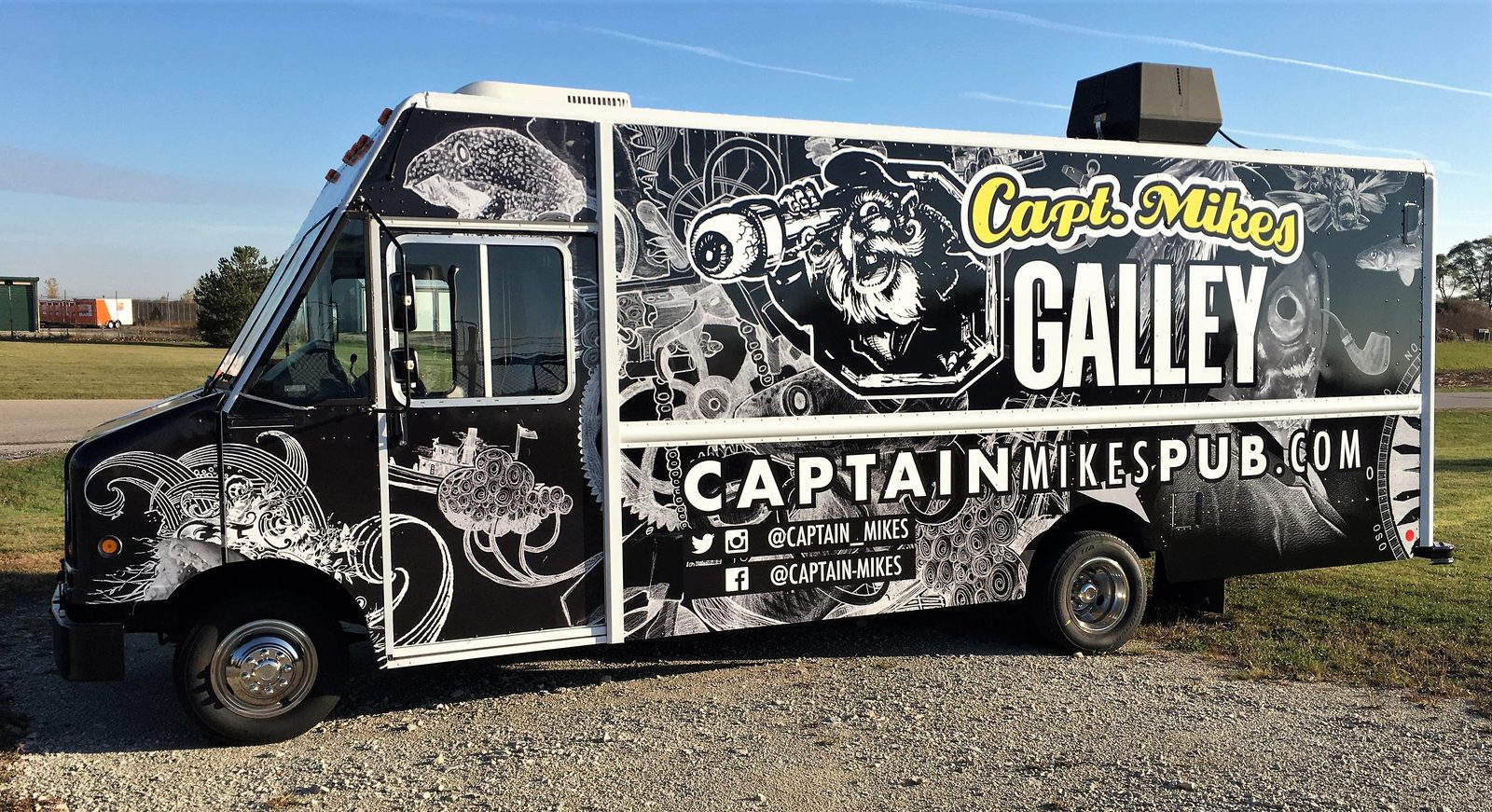
Your food truck wrap is the biggest advertisement your business owns, and it has to survive things a car wrap never will: all-day sun, heat and grease at the service window, highway miles, and a washdown at the end of every shift. Custom Finishes designs, prints, and installs food truck wraps built to hold up to all of it, from our shop in Winthrop Harbor, Illinois. We treat a food truck like the hard-working commercial vehicle it is, because commercial vehicles are what we do all day. Below is a real wrap we built, an honest breakdown of what drives the cost, and what makes a wrap last.
What drives the cost of a food truck wrap
What does a food truck wrap cost? The honest answer is that it depends on five things, and any shop that quotes you a flat price before seeing your truck is guessing. The five cost drivers are the size of the truck, how much of it you cover, how complex the design is, the material and laminate, and how much prep the surface needs. A partial wrap on a clean compact truck with a simple logo sits at the low end. A full custom-illustrated wrap on a long truck with a rough surface sits at the high end, and everything else falls in between. Here is what each driver actually does to the price, so you can see where your money goes and where you can control it.
- Size of the truck. A compact step van has far less square footage than a long box truck or a concession trailer. Less material plus fewer install hours means a lower price.
- How much you cover. A full wrap covers every panel, including doors, curves, and rivets, and takes the most material and labor. A partial wrap, meaning lettering, logos, and an accent band, uses a fraction of both. Coverage is the biggest lever you control.
- Design complexity. A clean logo-and-lettering layout is quick to design. A full custom illustration like the Capt. Mike's Galley build takes real design hours. Design is where a forgettable wrap and a head-turner part ways.
- Material and laminate. This is the one people cut and regret. Cast vinyl with a protective laminate resists fading, grease, and washing and lasts for years. Cheap calendared vinyl with no laminate can crack and lift in a single season. On a food truck the laminate is not an upsell, it is the difference between a wrap that lasts and one you redo.
- Prep and surface. A clean, sound surface wraps fast. Rust, an old wrap that has to come off first, or heavy surface grime all add labor. Because we also do fabrication and surface prep in-house, we prep the surface first instead of wrapping over problems.
Every truck is different, so we quote after we see yours. Send photos of the truck and what you have in mind and we will get you a real number.
Full wrap or partial? What your budget actually buys
A full wrap turns your whole truck into a billboard, every panel, edge to edge. It is the biggest visual impact and the highest cost. A partial wrap keeps the base color and adds lettering, logos, and a designed accent zone where people actually look. If budget is tight, a sharp partial wrap on a clean truck beats a cheap full wrap every time, and you can always add coverage later.
How long does a food truck wrap last?
A quality food truck wrap lasts several years, but a food truck is one of the harshest homes a wrap can have, so material choice matters more here than on a normal vehicle. Your truck bakes in the sun all day, runs hot and greasy near the service window, picks up highway miles, and gets washed down after every shift. Cheap vinyl without a laminate fades, stains, and starts lifting at the edges fast under that abuse. Cast vinyl with a protective laminate is built for it: it holds color, shrugs off grease and washing, and stays put. We build wraps for commercial vehicles that work for a living every day, so we spec the material for the truck's real life, not for a showroom.
Why a fleet shop beats a sign shop for this
Most food truck wraps come from sign shops that only do vinyl. We are a commercial fleet shop, so if your truck needs the surface cleaned up, a rusty spot blasted, or prep work done before it gets wrapped, we handle that in-house first. You get one shop for the prep and the wrap instead of bouncing between two, and a crew that works on hard-used commercial vehicles all day.
How we build your wrap
We start by learning your brand, your truck, and your goals. We design a layout built for the real shape of your vehicle, its panels, curves, and service window, then print it on commercial-grade material and install it clean. You approve the design before anything gets printed.
Frequently Asked Questions
Do you offer free quotes on food truck wraps?
Yes. Send photos of your truck and what you are picturing and we will give you a real number. We quote after seeing the truck because size, coverage, and condition all move the price.
Can you design the wrap, or do I need my own artwork?
We can design it from scratch around your brand, or work from artwork you already have.
Can you wrap a concession trailer or food trailer too?
Yes. We wrap food trucks, concession trailers, and food trailers.
Do I have to do a full wrap?
No. A partial wrap with lettering, logos, and an accent zone is a strong budget option and still turns heads.
How do I keep my wrap looking good?
Hand wash it, keep harsh degreasers off the vinyl, and rinse grease and road grime regularly. Quality laminate handles washing, but gentle care makes it last longer.
Related services
Ready to talk about your project?
Tell us what you need and our team will help determine the right next step.